Tummy Tuck in Miami

Tummy Tuck In Miami, Florida
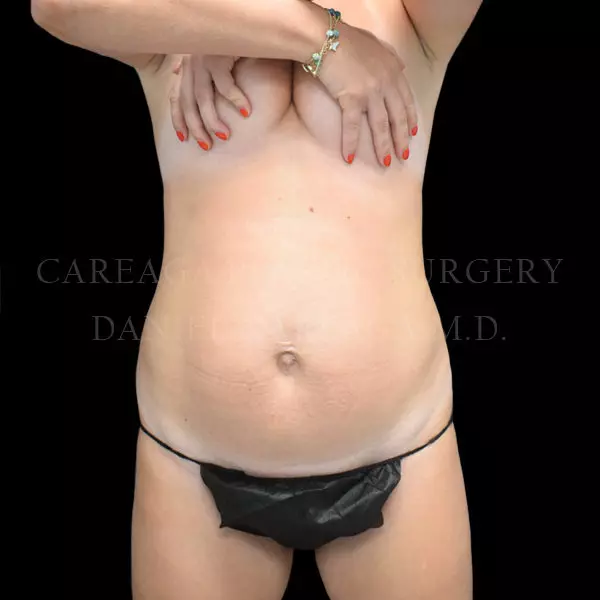
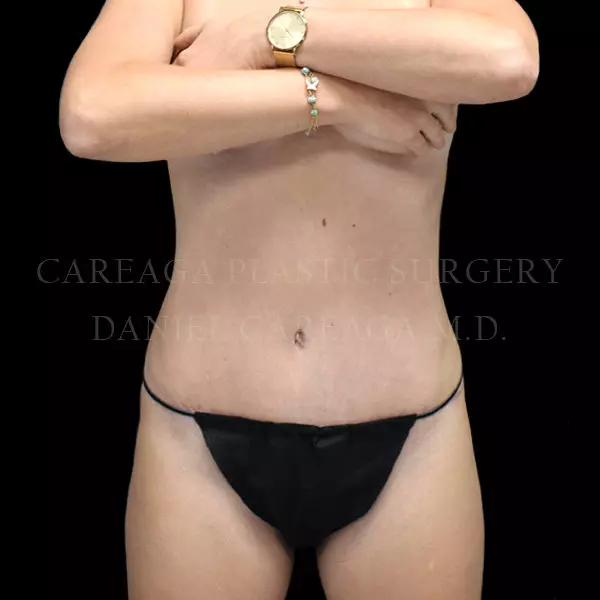
A tummy tuck in Miami is best for patients with loose abdominal skin, muscle separation, stretch marks, and lower abdominal laxity that cannot be corrected with diet, exercise, or liposuction alone. Abdominoplasty can restore a flatter, firmer, more athletic abdominal contour by removing excess skin, repairing separated abdominal muscles, and reshaping the waistline.


- Tummy Tuck/Abdominoplasty
- How Much Does a Tummy Tuck Cost in Miami?
- Why Patients Choose Dr. Daniel Careaga for Tummy Tuck Surgery
- What Is a Tummy Tuck?
- Who Is a Good Candidate for Tummy Tuck Surgery?
- What Are the Benefits of a Tummy Tuck?
- Misconceptions About Loose Abdominal Skin
- Why So Many Miami Tummy Tucks Look Unnatural
- Types of Tummy Tuck Surgery
- Tummy Tuck After Pregnancy
- Tummy Tuck After Weight Loss
- GLP-1 Weight Loss and Tummy Tuck Surgery
- Combining Liposuction With Tummy Tuck Surgery
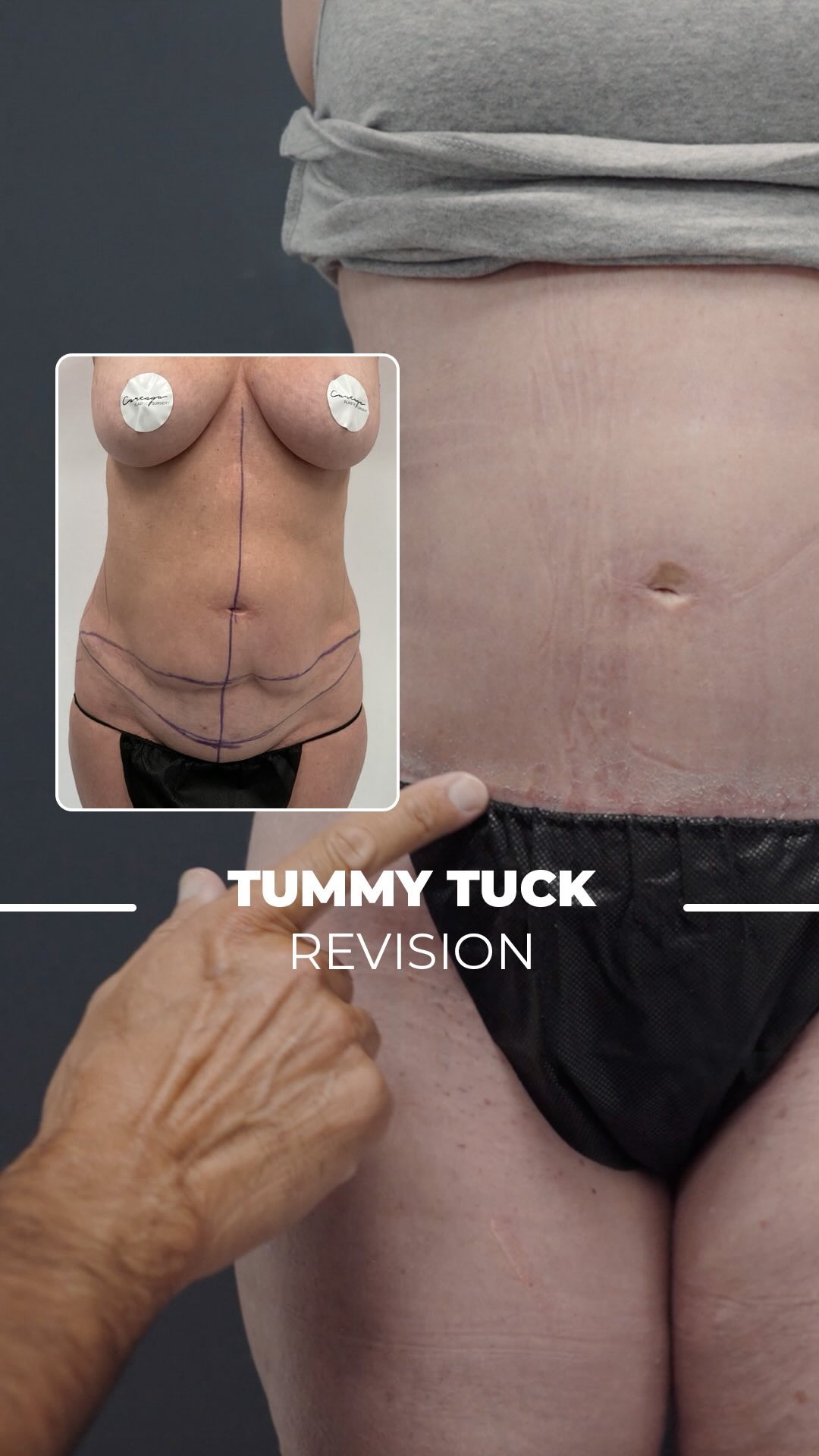
- Complex Tummy Tuck Revision Surgery in Miami
- The Importance of the Belly Button in Tummy Tuck Surgery
- Repairing Bad Liposuction and Contour Irregularities
- How Is a Tummy Tuck Performed?
- How to Prepare for a Tummy Tuck
- Recovery After Tummy Tuck Surgery
- What Do Tummy Tuck Results Look Like?
- Tummy Tuck Scars
- Risks and Safety Considerations
- Choosing the Right Tummy Tuck Surgeon in Miami
- Virtual Consultations for Out-of-Town Tummy Tuck Patients
- FAQs About Tummy Tuck Surgery
Abdominoplasty/Tummy Tuck Surgery
Your abdomen can be one of the most difficult areas of the body to improve with diet and exercise. Pregnancy, major weight loss, aging, hormonal changes, and genetics can all leave behind loose skin, weakened abdominal muscles, stretch marks, stubborn fat, and changes in waist definition that simply do not improve no matter how hard you work in the gym.
For many patients, it’s not just about appearance. Dr. Careaga’s patients tell him they no longer feel comfortable in clothing, avoid swimsuits, feel self-conscious during intimacy, or simply feel disconnected from the body they used to recognize in the mirror.
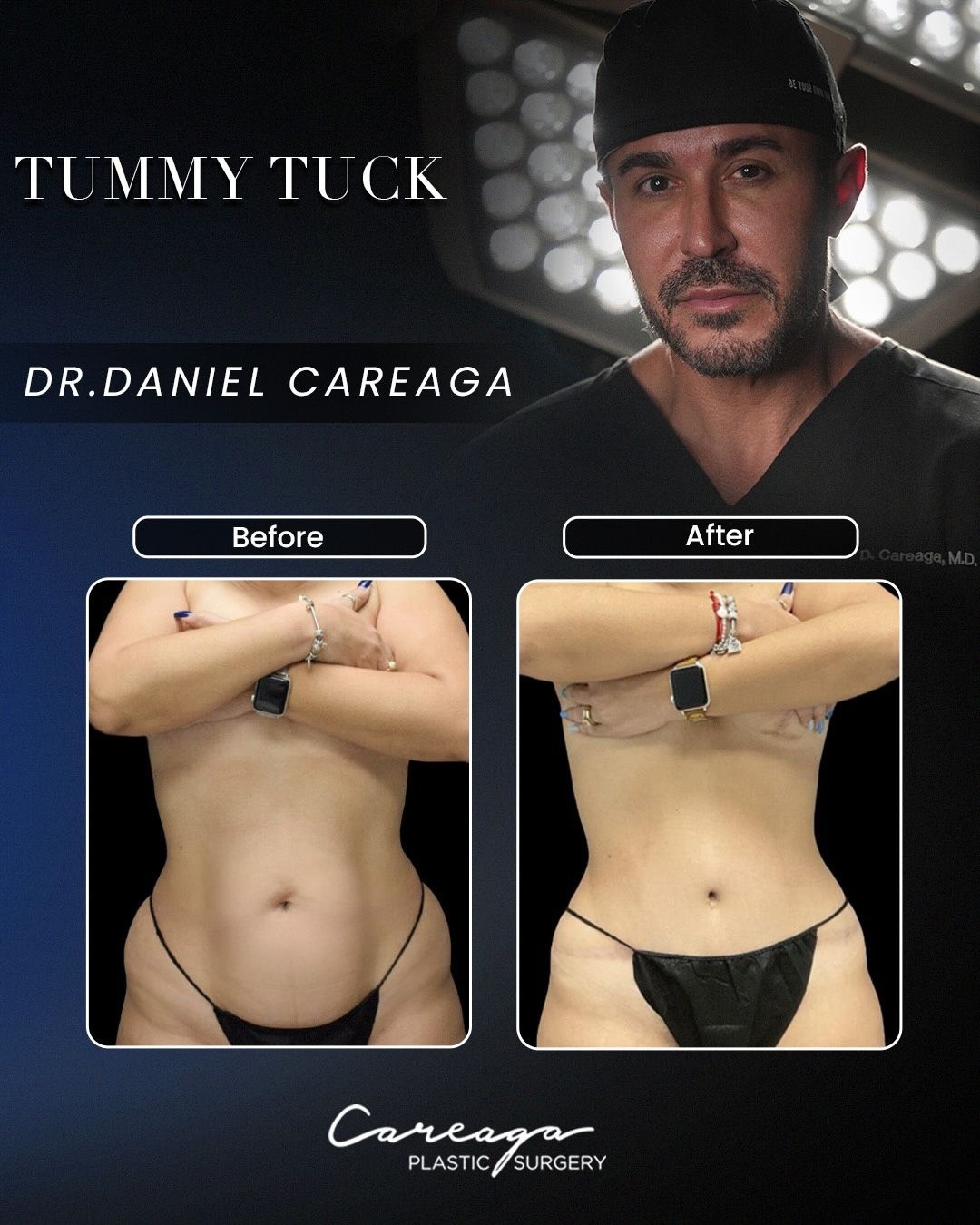
Tummy tuck surgery, also known as abdominoplasty, is designed to restore a firmer, flatter, more athletic abdominal contour by removing excess skin, tightening the abdominal wall, and reshaping the waistline. However, truly exceptional tummy tuck surgery goes far beyond simply “removing skin.” The difference between an average tummy tuck and a truly beautiful result is contour, balance, proportion, scar placement, belly button design, and surgical judgment.
Located in Coral Gables, Careaga Plastic Surgery serves tummy tuck patients throughout Miami and South Florida. Dr. Careaga’s goal is always to create results that look natural, elegant, and proportional to the rest of your body rather than overly tight, over-operated, or artificial.
Dr. Daniel Careaga is a board-certified plastic surgeon with more than 16 years of experience and over 15,000 procedures performed. A significant portion of his practice focuses on advanced body contouring, tummy tuck surgery, complex revision surgery, and correction of prior cosmetic procedures performed elsewhere. Procedures are performed in a Joint Commission-accredited surgical facility where patient safety remains the highest priority.
Real Stories: Tummy Tuck Patient Reviews

“I had a tummy tuck with Dr. Daniel Careaga one month ago, and I couldn’t be happier with my results. I’m truly satisfied with his work. His entire team is excellent—very attentive, caring, and always smiling.”
“Couldn’t have asked for a better surgeon to have performed my tummy tuck. My scar looks amazing!! My belly button looks sooo perfect!! Overall, I am in love with the outcome!!”
“I’m so grateful to Dr. Careaga for giving me a giant boost in self-confidence… If you are considering plastic surgery, then treat yourself by starting with Dr. Daniel Careaga”
How Much Does a Tummy Tuck Cost in Miami?
One of the most common questions patients ask is how much a tummy tuck costs in Miami. The reality is that pricing can vary significantly depending on the complexity of the procedure, the amount of skin excess, whether muscle repair is required, whether liposuction is combined, and whether the surgery is primary or revision surgery.
At Careaga Plastic Surgery, typical tummy tuck pricing ranges include:
- Mini Tummy Tuck: approximately $5,500–$7,500
- Full Tummy Tuck: approximately $6,500–$9,000
- Extended Tummy Tuck: approximately $7,500–$9,800
Revision tummy tuck surgery and correction of prior procedures are often more complex and may involve additional operative time, scar revision, contour reconstruction, fat grafting, or advanced tissue repair techniques.
It’s important to understand that tummy tuck surgery should never be approached as a commodity procedure where patients simply shop for the cheapest price. In Miami especially, there can be an enormous difference in surgical quality, safety standards, contouring ability, scar placement, and revision rates between practices.
A poorly performed tummy tuck can ultimately become far more expensive emotionally, physically, and financially if revision surgery becomes necessary later.
During your consultation, Dr. Careaga will evaluate your anatomy, discuss your goals in detail, and determine the safest and most effective surgical plan for your body. You will then receive a personalized quote tailored specifically to your procedure.
Financing options may also be available for qualified patients.
Learn More About FinancingWhy Patients Choose Dr. Daniel Careaga for Tummy Tuck Surgery in Miami
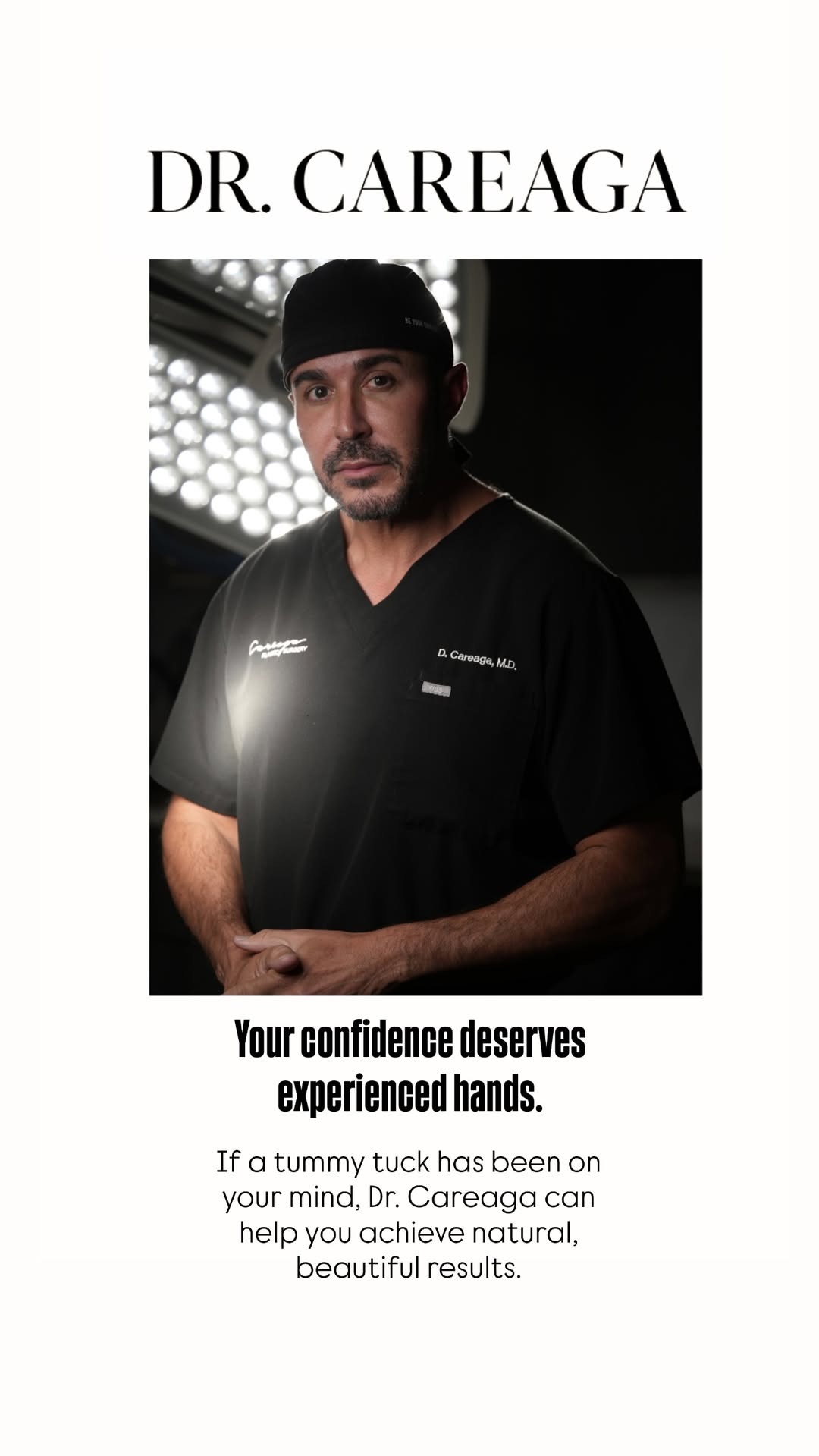
Miami is one of the most competitive plastic surgery markets in the world. Patients have endless choices. Unfortunately, they also encounter a very wide range in quality, experience, safety standards, and surgical philosophy.
With over 16 years of experience and more than 15,000 procedures performed, Dr. Daniel Careaga has dedicated a major part of his practice to advanced body contouring and complex revision surgery. His tummy tuck approach combines:
- Advanced abdominal contouring techniques
- Precise muscle repair
- Strategic liposuction sculpting
- Low-scar and short-scar tummy tuck techniques whenever appropriate
- Natural belly button reconstruction
- Waistline shaping
- Revision and reconstructive expertise
- Conservative tissue handling for improved healing
Every tummy tuck is customized because every patient’s anatomy is different. Some patients primarily need skin removal after pregnancy. Others require extensive muscle repair after major weight loss. Some patients need correction of severe contour irregularities from prior surgery performed elsewhere.
No two abdomens are the same, and surgery should never be approached with a cookie-cutter mentality.
At Careaga Plastic Surgery, procedures are performed in our Joint Commission-accredited surgical facility where patient safety always remains the top priority.
What Is a Tummy Tuck?
A tummy tuck, or abdominoplasty, is a surgical procedure designed to improve the contour and structural support of the abdomen by:
- Removing excess skin
- Tightening separated abdominal muscles
- Improving waist definition
- Eliminating stretched or hanging tissue
- Addressing residual fat deposits
- Repositioning and refining the belly button when necessary
Contrary to popular belief, a tummy tuck is not a weight loss surgery. The goal is contour improvement and restoration of abdominal shape.
For many patients, especially after pregnancy or major weight loss, the abdominal muscles become stretched and separated, a condition known as rectus diastasis. This separation often creates persistent abdominal bulging that cannot be corrected through exercise alone. During surgery, these muscles can be repaired internally to restore a flatter and stronger abdominal wall.
Who Is a Good Candidate for Tummy Tuck Surgery?
Tummy tuck surgery is often life-changing for these patients because it addresses issues that simply cannot be corrected naturally.
Ideal candidates
Ideal candidates for tummy tuck surgery are patients who:
- Are in generally good health
- Maintain a relatively stable weight
- Have loose abdominal skin
- Have weakened abdominal muscles
- Experience persistent abdominal bulging
- Have changes after pregnancy or weight loss
- Feel frustrated that exercise alone is no longer enough
- Have realistic expectations regarding surgery and recovery

What Patients Struggles With
Many patients seeking tummy tuck surgery are extremely active and healthy but still struggle with the following:
- Loose lower abdominal skin
- Stretch marks
- Muscle separation
- Loss of waist definition
- Hanging tissue after weight loss
- Excess skin after pregnancy

What Are the Benefits of a Tummy Tuck?
In general, tummy tuck surgery is an excellent way to:
- Smooth your waist and abdominal contour
- Flatten your stomach
- Remove excess fat and skin around the abdomen
- Define your abdominal muscles
- Restore changes caused by pregnancy, weight fluctuations, or aging
- Achieve a better fit in clothing, swimwear, etc.
Beyond the physical contouring, you can find renewed confidence and empowerment in your rejuvenated body. Dr. Careaga and his highly skilled, top-rated staff are ready to help you achieve lasting beauty that you can trust.
Schedule A ConsultationOne of the Biggest Misconceptions About Loose Abdominal Skin
One of the most common conversations Dr. Careaga has during consultations is with patients, spouses, or family members who believe that loose abdominal skin will eventually “tighten back up” with enough exercise, weight loss, abdominal workouts, or skin tightening treatments.
Unfortunately, that’s simply not how skin works.
Exercise can absolutely strengthen the abdominal muscles underneath the skin and reduce body fat, but it cannot repair skin that has been permanently stretched and structurally damaged after pregnancy or major weight fluctuations.
During pregnancy or significant weight gain, the skin stretches far beyond its normal capacity. Over time, the collagen and elastic fibers within the skin become weakened and, in many cases, literally tear. Stretch marks are actually visible evidence of this structural damage occurring within the deeper layers of the skin.
Once these collagen fibers are significantly damaged, the skin loses its ability to recoil normally.
Dr. Careaga often explains it to patients like this: imagine putting on a piece of clothing that’s much too tight and stretching it over and over until the fibers permanently weaken or rip. Even if you remove the tension afterward, the material never fully returns to its original shape because the structural support has already been damaged.
Skin behaves very similarly.
This is why many patients become frustrated after doing everything “right.” They lose weight. They work out consistently. They strengthen their core. Yet they still have hanging skin, abdominal wrinkling, lower abdominal folds, or loose tissue that simply will not improve.
At that point, the issue is no longer muscle tone or fat. It’s excess damaged skin.
This is also why there is currently no non-surgical treatment, cream, radiofrequency device, laser, injectable, or minimally invasive procedure capable of reproducing the degree of improvement achieved by surgically removing severely stretched abdominal skin.
While certain technologies may provide modest skin tightening in carefully selected patients with mild laxity, they cannot reverse major structural collagen damage after pregnancy or massive weight loss.
For patients with significant excess skin, tummy tuck surgery remains the only truly effective way to remove damaged tissue and restore a firmer, smoother abdominal contour.
Why So Many Miami Tummy Tucks Look Unnatural
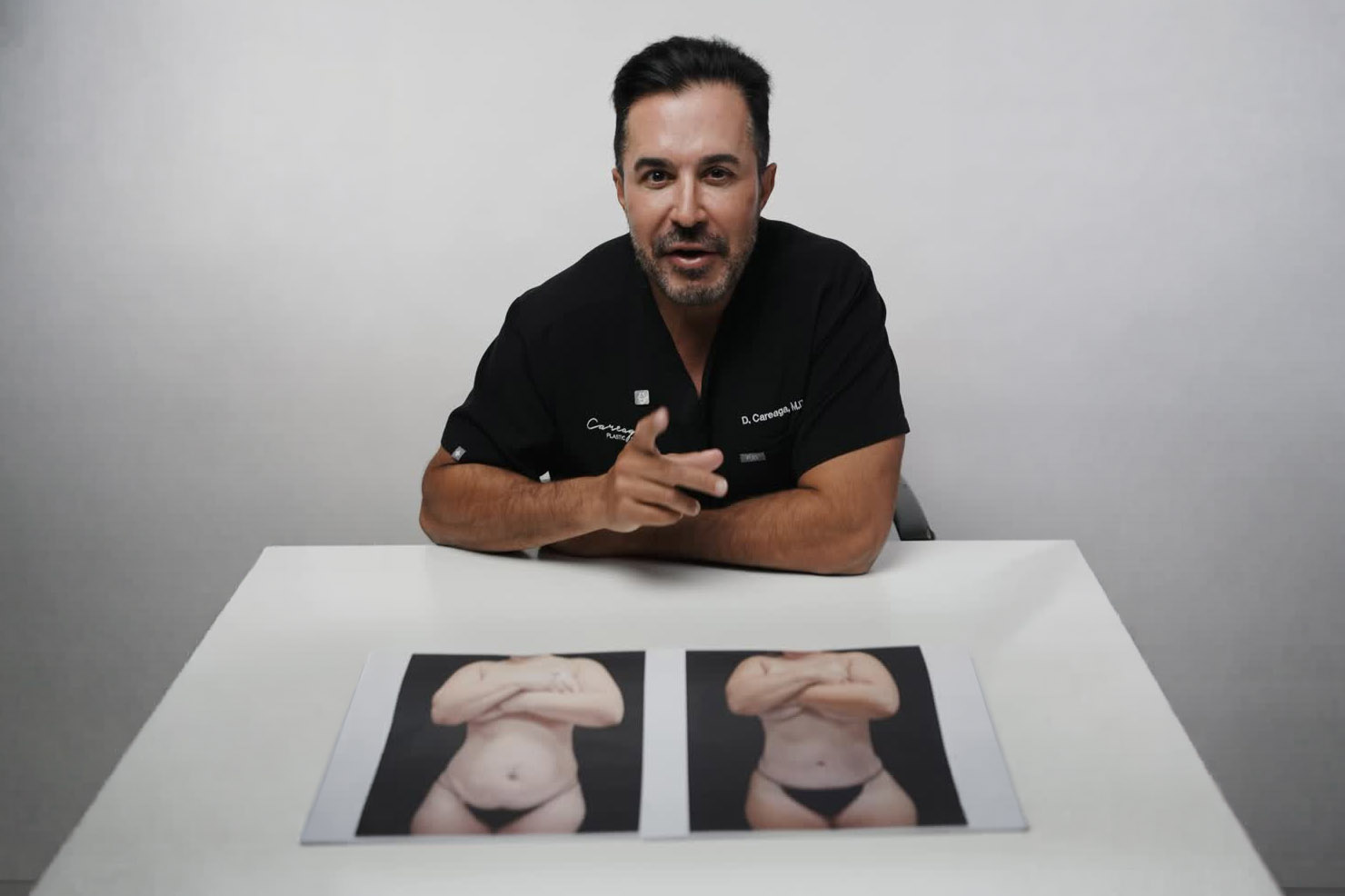
One of the biggest misconceptions about tummy tuck surgery is that it’s simply about pulling skin tight. In reality, creating a beautiful abdomen requires balancing multiple aesthetic factors simultaneously:
- Skin tension
- Waist contouring
- Muscle repair
- Scar placement
- Belly button shape
- Fat distribution
- Pubic contour
- Rib-to-hip transitions
- Overall body proportions
Unfortunately, Dr. Careaga frequently sees patients who underwent tummy tuck surgery elsewhere and are unhappy with results that look:
- Boxy
- Overly tight
- Artificial
- Uneven
- Scarred
- Distorted
- Thick through the waist
- Obviously surgical
Some of the most common problems Dr. Careaga corrects include:
- High scars that show in bikinis
- Widened or thick scars
- Belly buttons that look unnatural
- Residual loose skin
- Persistent abdominal fullness
- Poor waist definition
- Recurrent muscle separation
- Contour deformities after aggressive liposuction
- Dog ears and asymmetry
- Liposuction adhesions and fibrosis
Dr. Careaga believes that one of the biggest mistakes in tummy tuck surgery is over-aggressive tension and over-resection. A beautiful tummy tuck should not look “done.” The abdomen should look smooth, balanced, athletic, feminine or masculine in the appropriate way, and natural in motion.
These details are what separate elite body contouring from basic skin excision surgery.
Types of Tummy Tuck Surgery
Full Tummy Tuck
A full tummy tuck addresses the entire abdomen and is the most common approach for patients with:
- Significant loose skin
- Muscle separation
- Stretch marks
- Lower abdominal fullness
- Post-pregnancy change
This procedure may include:
- Removal of excess abdominal skin
- Internal muscle repair
- Belly button repositioning
- Liposuction contouring when appropriate
The scar is typically positioned low enough to remain hidden beneath most underwear and swimwear.
Mini Tummy Tuck
A mini tummy tuck focuses primarily on the lower abdomen below the belly button and is ideal for patients with:
- Mild skin laxity
- Small lower abdominal pooch
- Minimal muscle separation
- Limited excess skin
However, not everyone is a good candidate for a mini tummy tuck, and forcing a mini procedure on the wrong anatomy often leads to disappointing results.
Extended Tummy Tuck
An extended tummy tuck is designed for patients with more significant skin excess, particularly after major weight loss.
This procedure extends beyond the front of the abdomen and may address:
- Flanks
- Hips
- Lower back
- Love handles
- Circumferential skin laxity
These surgeries are often more complex and require extensive contour planning.
Tummy Tuck After Pregnancy
Pregnancy changes the abdominal wall in ways that often cannot be corrected naturally. Even patients who are extremely fit may still struggle with:
- Loose skin
- Stretch marks
- Muscle separation
- Lower abdominal bulging
- Loss of waist definition
Many women become frustrated because they feel they “did everything right” after pregnancy but still cannot regain their previous contour.
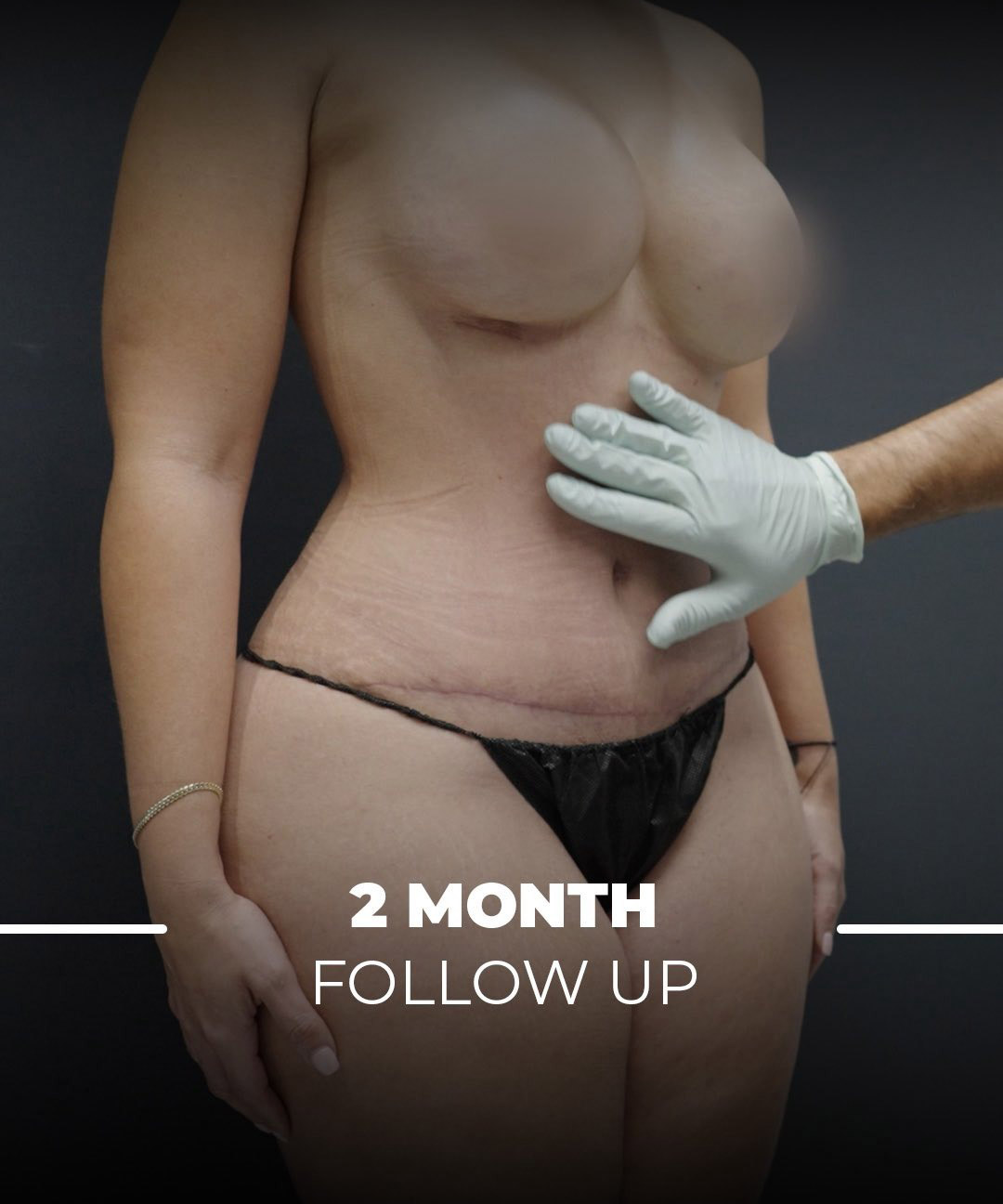
A properly performed tummy tuck can dramatically restore abdominal shape and confidence after childbirth.
Tummy Tuck After Weight Loss
Massive weight loss is an incredible achievement, but it frequently leaves behind excess skin that exercise cannot remove.
Patients after weight loss often experience:
- Hanging abdominal skin
- Persistent skin folds
- Difficulty fitting clothing
- Rashes and irritation
- Loss of body proportions
- Deflated tissue quality
These cases often require advanced contouring techniques and careful surgical planning to avoid excessive tension and unnatural shaping.
GLP-1 Weight Loss and Tummy Tuck Surgery
GLP-1 medications are changing modern medicine and body contouring. Many patients are now achieving substantial weight loss that previously would have been extremely difficult through diet and exercise alone.
While these medications can produce dramatic improvements in overall health and body fat reduction, rapid weight loss frequently leaves behind loose abdominal skin, deflated tissue quality, and muscle separation that cannot be corrected naturally.
Patients considering tummy tuck surgery after GLP-1 weight loss should ideally reach a relatively stable weight before surgery. Dr. Careaga also emphasizes the importance of proper nutrition and adequate protein intake to support healing and preserve muscle mass.
It is also important for patients to inform their surgeon and anesthesia team if they are taking GLP-1 medications. These medications can slow stomach emptying and may increase anesthesia-related aspiration risk. In many cases, GLP-1 medications may need to be temporarily discontinued before surgery for safety reasons.
Combining Liposuction With Tummy Tuck Surgery
One of the biggest factors that separates average tummy tuck results from exceptional ones is contouring.
Simply tightening the abdomen without properly shaping the waist and surrounding areas often creates a flat but boxy appearance.
Strategic liposuction can help improve:
- Waist definition
- Flank contour
- Transition zones
- Overall body proportions
- Athletic definition
Dr. Careaga’s philosophy is that the abdomen should blend naturally with the entire torso rather than looking isolated or surgically disconnected.
Complex Tummy Tuck Revision Surgery in Miami
A significant portion of Dr. Careaga’s body contouring practice involves revision tummy tuck surgery and correction of previous cosmetic procedures performed elsewhere.
Revision surgery is often substantially more difficult than primary surgery because prior operations may leave:
- Scar tissue
- Distorted anatomy
- Fibrosis
- Poor blood supply
- Excessive tension
- Tissue deficiencies
- Irregular healing patterns
Some patients come to Dr. Careaga after one or multiple prior surgeries and simply feel that their original tummy tuck never achieved the contour they hoped for.
Common issues Dr. Careaga addresses include:
- Recurrent rectus diastasis
- Poorly positioned scars
- Thick or widened scars
- Belly button deformities
- Residual loose skin
- Persistent abdominal bulging
- Severe contour irregularities
- Adhesions and fibrosis
- Asymmetry
- Poor waist definition
- “Shelfing” deformities
- Over-aggressive liposuction damage
Revision surgery often requires advanced reconstructive techniques, scar revision, fat grafting, tissue redistribution, strategic liposuction, and detailed contour planning.
Patients frequently travel from throughout South Florida and other parts of the country seeking correction of prior tummy tuck surgery because these cases often require a level of experience beyond standard cosmetic surgery.
The Importance of the Belly Button in Tummy Tuck Surgery
One of the most important details in tummy tuck surgery is the belly button.
Patients immediately recognize when a belly button looks:
- Artificial
- Overly round
- Too large
- Pulled tight
- “Stuck on”
- Obviously surgical
In revision surgery, correcting the belly button can become particularly difficult because the natural anatomy has often already been distorted.
Dr. Careaga’s philosophy is simple: a beautiful belly button should not attract attention to itself. It should look natural, proportional, subtle, and anatomically appropriate for the patient’s body.
This is one of the areas where surgical artistry truly matters.
Repairing Bad Liposuction and Contour Irregularities
Dr. Careaga also frequently treats patients who were left with contour deformities after poorly performed liposuction.
These deformities may include:
- Rippling
- Waviness
- Deep dents
- Uneven fat removal
- Fibrosis
- Scar tissue tethering
- Irregular abdominal shadows
- Distorted waist contours
In many cases, these problems occur because of:
- Overly aggressive superficial liposuction
- Poor technique
- Inexperience
- Excessive fat removal
- Inadequate understanding of healing dynamics
Correcting these issues is often far more difficult than performing the original procedure.
Revision surgery may involve:
- Scar tissue release
- Fat grafting
- Tissue redistribution
- Skin excision
- Strategic contouring
- Advanced reconstructive techniques
The goal is not simply “removing more fat.” The goal is restoring smoothness, harmony, proportion, and natural anatomical transitions.
How Is a Tummy Tuck Performed?
After a thorough evaluation of your health and medical history, Dr. Careaga and his team will create a treatment plan tailored to your anatomy and goals.
During surgery, you will be administered general anesthesia to allow for a safer, painless procedure. Your surgeon will make an incision across your lower abdomen. The length and placement of this incision will depend on the technique and amount of correction needed.
From there, your surgeon will remove excess fat, trim loose skin, and tighten the abdominal muscles. In some cases, the belly button is repositioned. Dr. Careaga and his team will communicate the unique details of your tummy tuck surgery during your consultation.
How to Prepare for a Tummy Tuck
Preparing for a tummy tuck is as important for your results as the surgery itself. Before surgery, you may be asked to adjust certain medications, stop smoking before and after your procedure, and avoid blood-thinning medications or supplements that could increase your risk of bleeding.
Additionally, it may be beneficial to prepare for your recovery ahead of time. This includes planning for transportation, comfortable clothing, and other supportive essentials.

Recovery After Tummy Tuck Surgery
Recovery varies depending on:
- Surgical complexity
- Extent of muscle repair
- Skin quality
- Combination procedures
- Revision status
- Individual healing characteristics
Most patients experience:
- Swelling
- Tightness
- Bruising
- Temporary discomfort
- Fatigue during the first several days
Patients are typically encouraged to begin light walking early after surgery while avoiding strenuous activity for approximately six weeks.
Compression garments, careful postoperative monitoring, and adherence to recovery instructions are extremely important for optimal healing.
What Do Tummy Tuck Results Look Like?
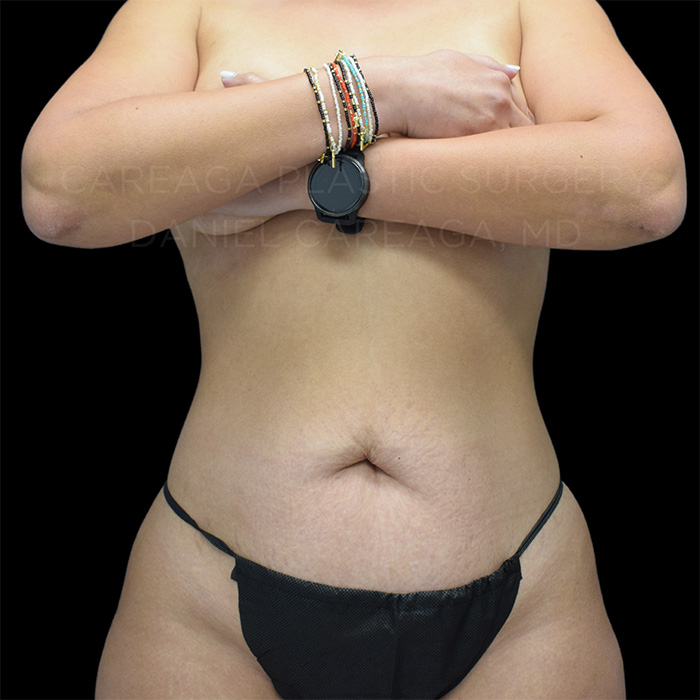
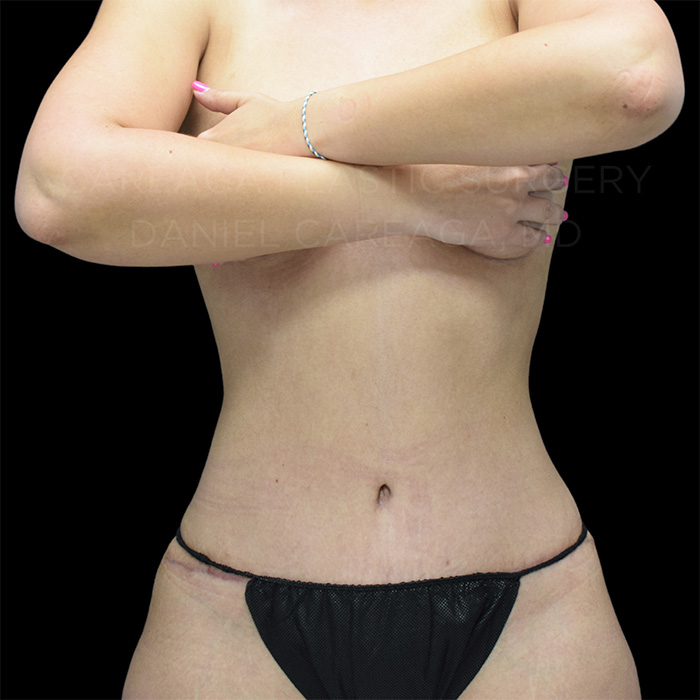
A fully healed tummy tuck will create a slimmer, firmer abdominal profile that looks more balanced with the rest of your body contour. Maintaining a healthy diet, regular exercise, and a stable weight can help preserve your results for the long term.
While final results are long-lasting, factors such as aging and weight gain can affect your outcomes. In addition, future pregnancies can still reverse your results. It’s recommended that you finish having children before considering this procedure.
View Before and After Photos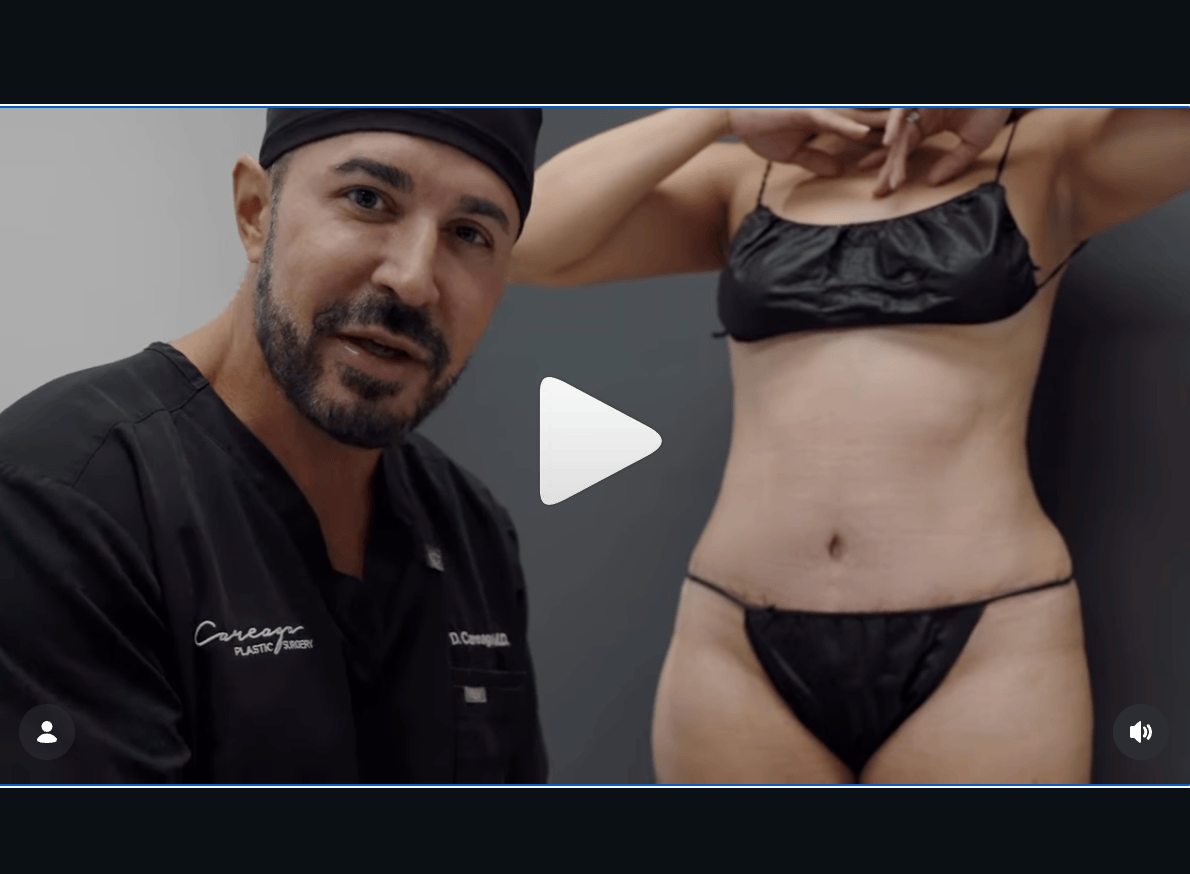
Tummy Tuck Scars
Scars are an unavoidable part of tummy tuck surgery, but careful planning can dramatically improve how they heal and where they are positioned.
One of Dr. Careaga’s priorities is placing scars:
- As low as possible
- Hidden beneath swimwear
- Balanced across the hips
- Without excessive tension
Poor scar placement is one of the most common reasons patients seek revision surgery.
Dr. Careaga carefully evaluates skin tension, body proportions, natural bikini lines, prior C-section scars, and abdominal movement before surgery. Whenever anatomy safely allows, his goal is to position the tummy tuck scar as low as possible so it remains concealed beneath underwear, swimwear, and most clothing styles.
One of Dr. Careaga’s techniques involves evaluating how the abdominal tissues move and stretch during preoperative planning to help optimize scar placement and reduce the risk of a scar that sits too high after healing.
Risks and Safety Considerations
Like any surgical procedure, tummy tuck surgery carries potential risks. These may include:
- Bleeding
- Infection
- Delayed wound healing
- Fluid collections
- Blood clots
- Scarring
- Asymmetry
- Anesthesia-related complications
Choosing a qualified, experienced, board-certified plastic surgeon and an accredited surgical facility plays a major role in reducing these risks.
At Careaga Plastic Surgery, patient safety is always the highest priority from consultation through recovery.
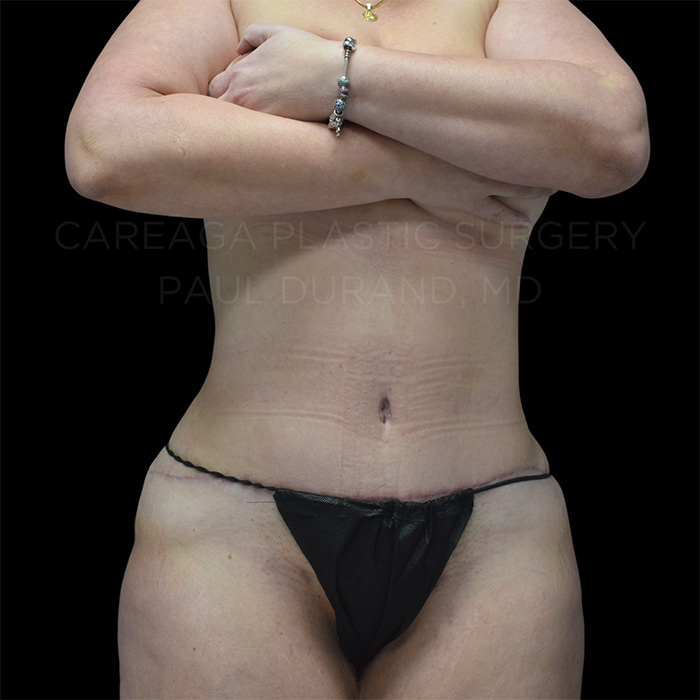
Before and After Photos: Tummy Tuck in Miami, Florida
View Gallery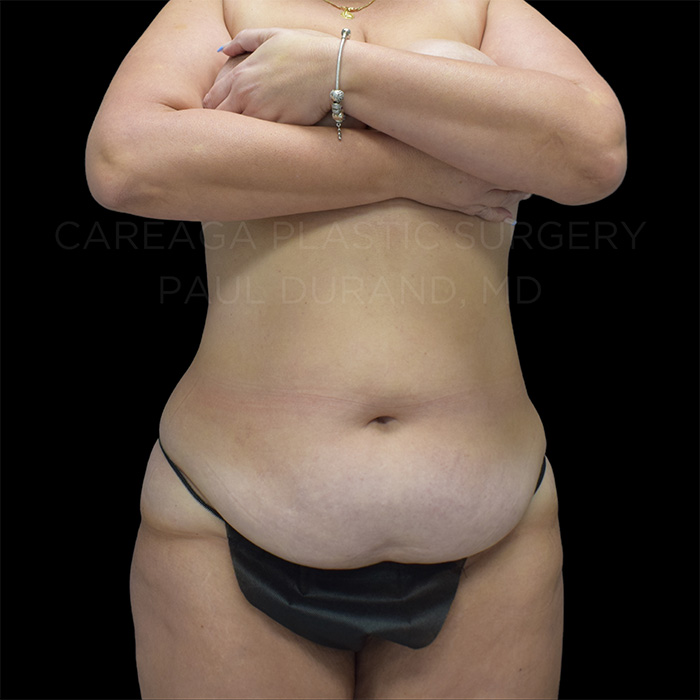
Choosing the Right Tummy Tuck Surgeon in Miami
Tummy tuck surgery is often viewed as a “common” cosmetic procedure, but in reality, it is one of the most technically demanding operations in aesthetic plastic surgery. Creating a beautiful result requires far more than simply removing skin. It requires an understanding of anatomy, contour, scar placement, tissue healing, body proportions, and long-term aesthetics.
Just as importantly, tummy tuck surgery is still real surgery and should be approached with the same seriousness and attention to safety as any major operation.
When choosing a plastic surgeon in Miami, patients should carefully evaluate:
- Board certification
- Surgical experience
- Before-and-after results
- Facility accreditation
- Revision experience
- Safety protocols
- Consistency of results
- Communication and follow-up care
- Postoperative support and long-term follow-up
- Experience managing complex revision cases
Unfortunately, many patients focus primarily on price alone and only later realize that there can be enormous differences in training, judgment, safety standards, and aesthetic outcomes between practices.
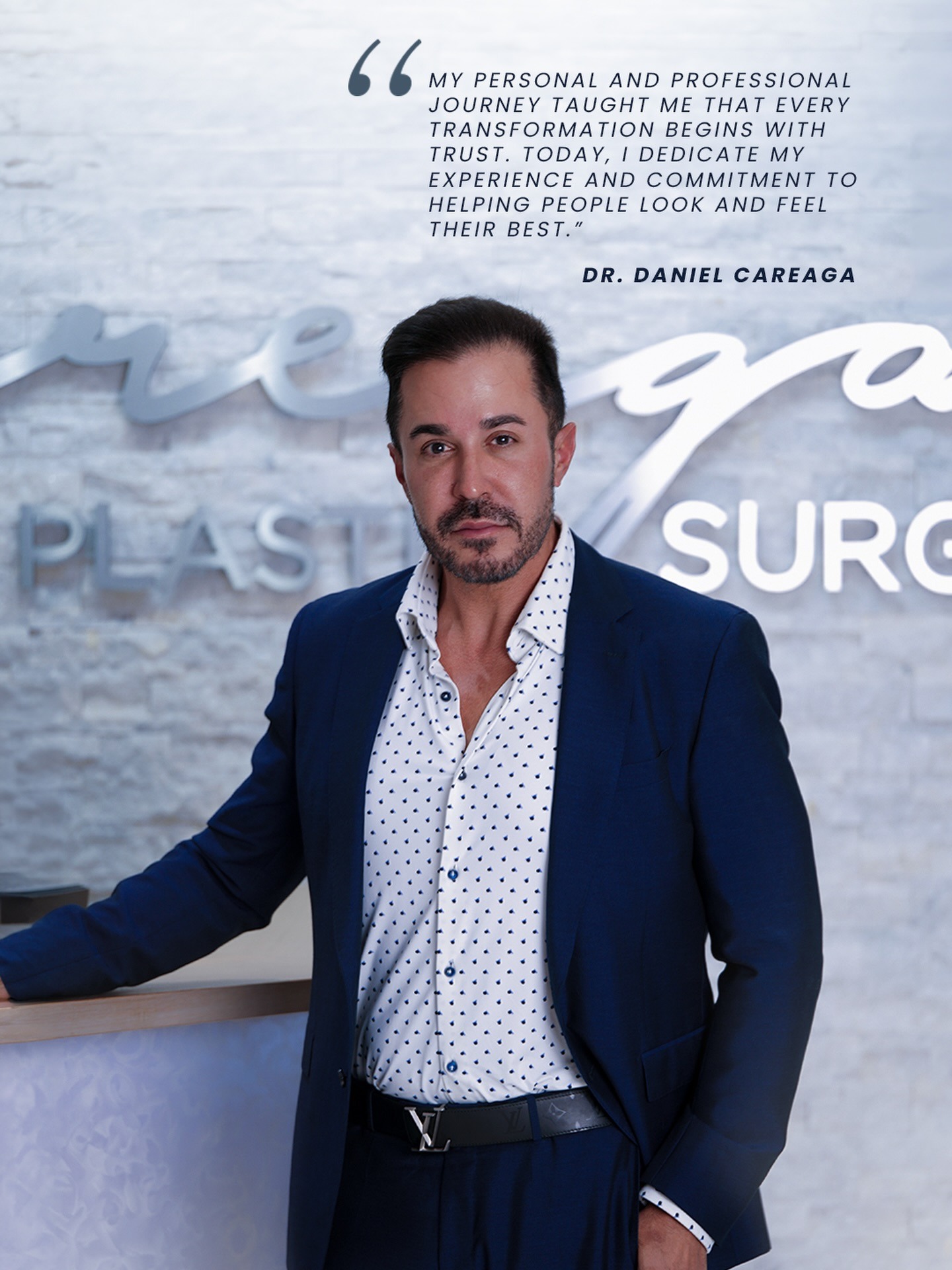
At Careaga Plastic Surgery, Dr. Careaga’s philosophy has always been to prioritize natural-looking results, patient safety, honest communication, and individualized surgical planning. Whether performing a primary tummy tuck or correcting a complex prior surgery, Dr. Careaga’s goal is always to create results that look balanced, elegant, athletic, and natural rather than artificial or overdone.
For many patients, tummy tuck surgery is not simply about appearance. It’s about finally feeling comfortable in their body again after pregnancy, weight loss, aging, or previous disappointing surgery.
Choosing the right surgeon can make all the difference.
Virtual Consultations for Out-of-Town Tummy Tuck Patients
Careaga Plastic Surgery regularly works with patients traveling from throughout Florida, across the United States, and internationally for tummy tuck surgery and complex revision body contouring.
Many patients initially begin the process through a virtual consultation, which allows Dr. Careaga to review medical history, discuss goals, evaluate photographs, and determine whether a patient may be a good surgical candidate before traveling to Miami.
Our team helps coordinate:
- Virtual consultations
- Surgical planning
- Preoperative instructions
- Travel guidance
- Recovery logistics
- Hotel recommendations
- Follow-up scheduling
After surgery, many aspects of recovery and follow-up can also be managed remotely through photographs, video visits, and direct communication with our office when appropriate.
Because revision surgery and complex body contouring often require specialized expertise, many patients travel specifically seeking a higher level of surgical experience and aesthetic judgment than what may be available locally.
Schedule Your Tummy Tuck Consultation in Miami
Whether you are considering your first tummy tuck or seeking correction after a previous surgery elsewhere, choosing the right surgeon matters tremendously.
Tummy tuck surgery is not simply about removing skin. It is about restoring balance, contour, proportion, and confidence while maintaining natural-looking results that fit your body.
Careaga Plastic Surgery welcomes patients from:
- Miami
- Coral Gables
- Coconut Grove
- Brickell
- Pinecrest
- Kendall
- Doral
- Miami Beach
- Throughout South Florida
- Across the United States
If you are ready to explore what advanced abdominal contouring can achieve, schedule your personalized consultation with Dr. Daniel Careaga today.
Call Careaga Plastic Surgery at (305) 960-7511 or complete our online consultation form to begin your transformation.
FAQs About Tummy Tuck Surgery
-
This is one of the most common questions patients ask during consultations.
The answer depends on whether the problem is primarily:
- Excess fat
- Loose skin
- Muscle separation
- Or a combination of all three
Liposuction is designed to remove excess fat and improve contour, but it does not tighten severely stretched skin or repair separated abdominal muscles.
Patients who have the following symptoms typically require a tummy tuck rather than liposuction alone:
- Loose hanging skin
- Stretch marks
- Lower abdominal folds
- Significant skin laxity after pregnancy or weight loss
- Persistent abdominal bulging from muscle separation
One of the most common mistakes Dr. Careaga sees is patients undergoing aggressive liposuction when they actually need skin removal. In those situations, the skin often becomes even more wrinkled or irregular afterward because the underlying problem was excess damaged skin rather than fat.
During your consultation, Dr. Careaga will evaluate your skin quality, fat distribution, muscle integrity, and overall anatomy to determine whether liposuction, tummy tuck surgery, or a combination approach will create the best result.
-
No. Liposuction removes fat, but it does not remove excess skin or repair separated abdominal muscles. Patients with loose skin or abdominal laxity typically require a tummy tuck for meaningful improvement.
-
Yes. One of the major benefits of tummy tuck surgery is repair of rectus diastasis, which commonly occurs after pregnancy or weight fluctuations.
-
No. A tummy tuck is designed for contour improvement, not weight loss. Ideal candidates are already relatively close to their goal weight.
-
This depends. While patients should already be close to their ideal weight, it’s not always necessary to diet before surgery. Dr. Careaga and his team will evaluate your goals during your consultation and make the best recommendations for your case. Once surgery is complete, keeping a stable weight and healthy lifestyle habits is the best way to maintain results.
-
Most patients require approximately one to two weeks before returning to light activities and four to six weeks before resuming strenuous exercise.
-
Yes, you can absolutely become pregnant after a tummy tuck. The surgery does not affect fertility or your ability to carry a pregnancy.
However, future pregnancies can stretch the skin and abdominal muscles again, potentially reversing part of your surgical result. For this reason, most plastic surgeons recommend waiting until you are finished having children before undergoing tummy tuck surgery whenever possible.
That said, life does not always happen according to perfect timing, and some patients still choose to proceed earlier because of severe muscle separation, loose skin, or significant quality-of-life concerns.
This is a very individualized decision that can be discussed during your consultation.
-
Since general anesthesia is used, patients do not feel any pain during the surgery. While soreness, swelling, and bruising may be common during recovery, Dr. Careaga may prescribe oral pain medications if needed.
-
Stretch marks located on the lower abdominal skin that is removed during surgery are often significantly improved or eliminated.
-
It’s important that you avoid strenuous work for four to six weeks after a tummy tuck. This includes household tasks, such as lifting children or doing chores. If you have a less physically demanding job, such as office work, you should still expect to take at least one to two weeks off. Ultimately, your recovery process depends on the surgical technique used, the extent of correction needed, and your individual healing response.
-
Yes. Tummy tuck surgery is very commonly combined with breast procedures as part of a Mommy Makeover.
Common combinations include:
- Breast augmentation
- Breast lift
- Breast reduction
- Breast implant removal
- Breast implant exchange
- Liposuction and body contouring
Combining procedures can often improve overall body proportions while allowing patients to recover from multiple procedures during a single recovery period.
-
Results can last many years when patients maintain a stable weight and healthy lifestyle.
-
A mini tummy tuck focuses primarily on the lower abdomen below the belly button, while a full tummy tuck addresses the entire abdominal wall and often includes muscle repair.